

On September 27, 2024, Hurricane Helene sent a 75-foot oak tree crashing through the roof of Hannah’s home in Spruce Pine, N.C.
“We ended up grabbing a trash bag full of clothes, a few pictures, and we waited six hours in our basement watching the floodwater rise until we could finally get out,” Hannah says. “We lost everything.”
A year later, Hannah’s family of four lives in a camper parked in her mother’s driveway while working to settle with their insurance company for funds to cover their damage and loss.
“We’re just trying to rebuild and get our lives back on track and find a new normal,” says Hannah.
Though stores and highways are reopening, many Hurricane Helene survivors in Southern Appalachia feel the storm’s impact every day.
Hurricane Helene made landfall on Sept. 26, 2024, on Florida’s Gulf Coast as a powerful Category 4 storm, then swept through Georgia, North Carolina, South Carolina and Tennessee.
Over six days, Western North Carolina received 30 inches of rain, causing rivers to overflow, triggering landslides, washing out roads and flooding entire communities. From Indiana to Florida, more than 230 people died as a result of the storm.
Before Helene made landfall, Americares reached out to 360 partners in the storm’s path to assess local needs. Some, like Greenville Free Clinic in South Carolina, had already prepared using the Americares Climate Resilience for Frontline Clinics Toolkit.
“We knew we could lose power,” says Greenville Free Clinic’s Executive Director, Suzie Foley. The toolkit prompted Foley to contact the local hospital to store medicine during a power outage.
“Boy, did we see that that had paid off when we were able to quickly and immediately put into place a plan that helped salvage a quarter-million-dollars-worth of insulin and vaccines,” Foley says.
Americares response teams were on the ground immediately, assessing health needs in the hardest-hit communities in Florida, Georgia, North Carolina, South Carolina and Tennessee.
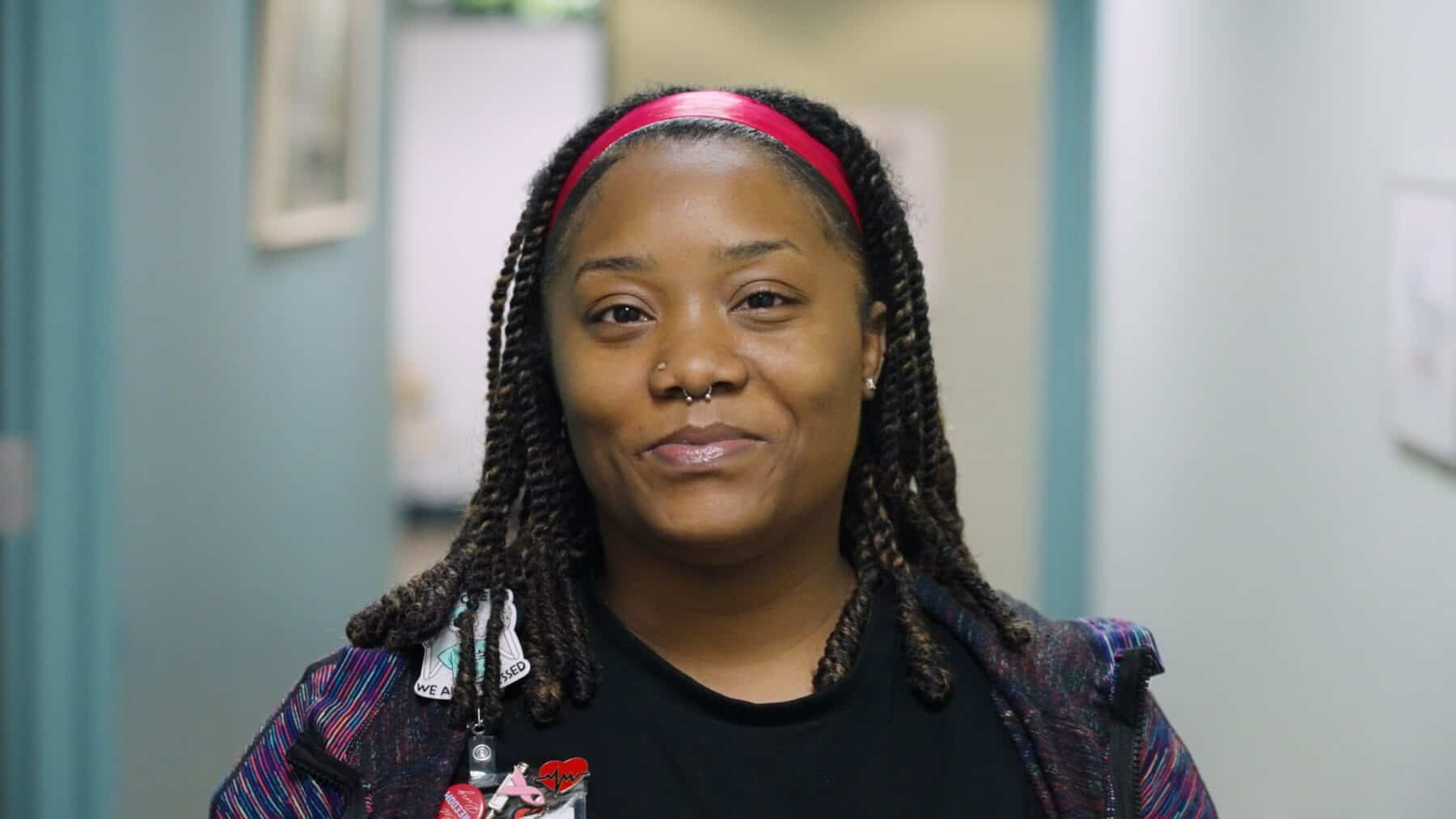
“A year later for me — some parts of it are still touchy, still emotional. I’m just glad that we’re able to still be here and actually welcome people in and be able to provide them with the care that they need.”
— Africa Freeman, medical assistant, Mercy Urgent Care, Asheville, N.C.
Americares support continues as communities recover and rebuild. Local health centers still need help, and lingering trauma affects many survivors. Americares recovery programs focus on building resilience among clinics serving low-income, uninsured and under-insured patients.
One key activity Americares is providing is mental health training and psychosocial support sessions for staff, with one-on-one follow-ups if needed. Thirteen clinics in three states are participating.
“We felt seen when Americares reached out to see how they could offer support,” says Mountain Community Health Partnership Co-Interim Behavioral Director Tiffany English, who welcomes the training and support. “I do see our connection and participation with Americares as a means of promoting resiliency among staff and in our communities.”
Hannah is now a peer educator at Mountain Community Health Partnerships. She and her family received behavioral health therapy services from the clinic, and Hannah can now help others in her situation.
“To me, the mountains are home,” Hannah says. “Even though I don’t have a home right now, it’s still in the beauty of the mountains.”
Less than two weeks after Hurricane Helene, Category 3 Hurricane Milton made landfall in Siesta Key, Florida, causing a deadly tornado outbreak and widespread flooding. More than 30 people died.
Americares quickly mobilized, contacting its network of Florida partners and providing shipments of medicine and relief supplies, along with $365,000 in emergency funding to nine local health organizations.
From hurricanes to health crises, Americares continues to provide rapid-response support and long-term recovery efforts across the Southeast. One year after Hurricane Helene, survivors are rebuilding lives, strengthened by community connections and ongoing support.
